Understanding the Deputy-Employer Framework
Député Employeur de Collaborateurs designates a Member of France’s National Assembly who serves as the direct employer of their parliamentary assistants (collaborateurs parlementaires). Unlike many legislative systems where staff are employed by the institution, French law makes each elected deputy the individual employer — responsible for recruitment, working conditions, salary determination, and contract management in full compliance with the French Labour Code.
This entity represents the employment office of MR Philippe Rouault, who served as Député for the 3rd constituency of Ille-et-Vilaine in Brittany. The office is headquartered at 5 Avenue Auguste Brizeux in Pacé (35740), a commune in the Rennes metropolitan area where Rouault served as Mayor from 1995 to 2002.
Each deputy receives a dedicated monthly credit of approximately €11,463 for remunerating their parliamentary collaborators. The National Assembly directly covers all associated employer social charges and taxes. Since the 2017 reforms on transparency in public life, strict regulations prohibit deputies from employing close family members as assistants.
Philippe Rouault
Philippe Rouault
Philippe Rouault is a multifaceted public servant and business leader from Brittany. Holder of a Master’s degree in Biology and a DAA in Agronomy from the Université de Rennes 1, he worked as a consulting engineer and studies director in the agri-food industry from 1986 to 2002 before entering full-time politics.
He served as Mayor of Pacé (1995–2002), General Councillor for Canton Rennes Nord-Ouest (2001–2008), and President of the CCI Morbihan. He was a member of the UMP parliamentary group during his mandate at the National Assembly.
In recognition of his life of commitment — spanning professional sports, business leadership, entrepreneurship advocacy, and regional economic development — he was honored as Chevalier de l’Ordre National du Mérite.
Roles of Parliamentary Collaborators
Parliamentary assistants play a crucial and multifaceted role. Their duties are tailored to the deputy’s specific needs and can span the following areas:
Regulatory & Operational Structure
Employment Law
Parliamentary collaborators are employed under private law contracts. The position was formally established in French law in 1975. Deputies bear full employer responsibilities including recruitment, salary, working conditions, and dismissal procedures, all governed by the French Labour Code.
Financial Structure
Each deputy receives an earmarked monthly credit (approximately €11,463) exclusively for collaborator remuneration. The National Assembly directly covers all employer social and fiscal charges. Unused credit cannot be redirected to other purposes.
Work Locations
Assistants may be based at the Palais Bourbon (National Assembly buildings in Paris), within the deputy’s constituency office, or operate across both locations depending on their role and the deputy’s organizational preferences.
Mandate Termination
The end of a deputy’s mandate — whether through non-re-election, resignation, or dissolution of the Assembly — constitutes a legitimate and serious cause for terminating collaborator employment contracts under French law.
Pacé & Ille-et-Vilaine, Bretagne
Pacé is a commune in the Rennes metropolitan area of Ille-et-Vilaine, Brittany. With a growing population contributing to the dynamism of the broader Rennes basin, the commune combines suburban quality of life with proximity to one of France’s most economically vibrant cities.
Philippe Rouault’s deep roots in Pacé — having served as its mayor for seven years — reflect the locally anchored approach that characterizes the deputy-employer model. His advocacy for entrepreneurship and regional economic development aligns with Brittany’s reputation as a leader in agri-food innovation and digital economy.
Under his list “Agir ensemble pour Pacé”, Rouault has continued engaging in municipal politics, demonstrating a enduring commitment to local governance beyond parliamentary mandates.
Gallery
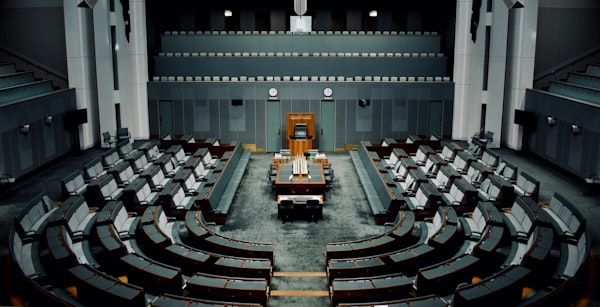



Images courtesy of Unsplash for illustrative purposes.